
Another catch-up post from last year…
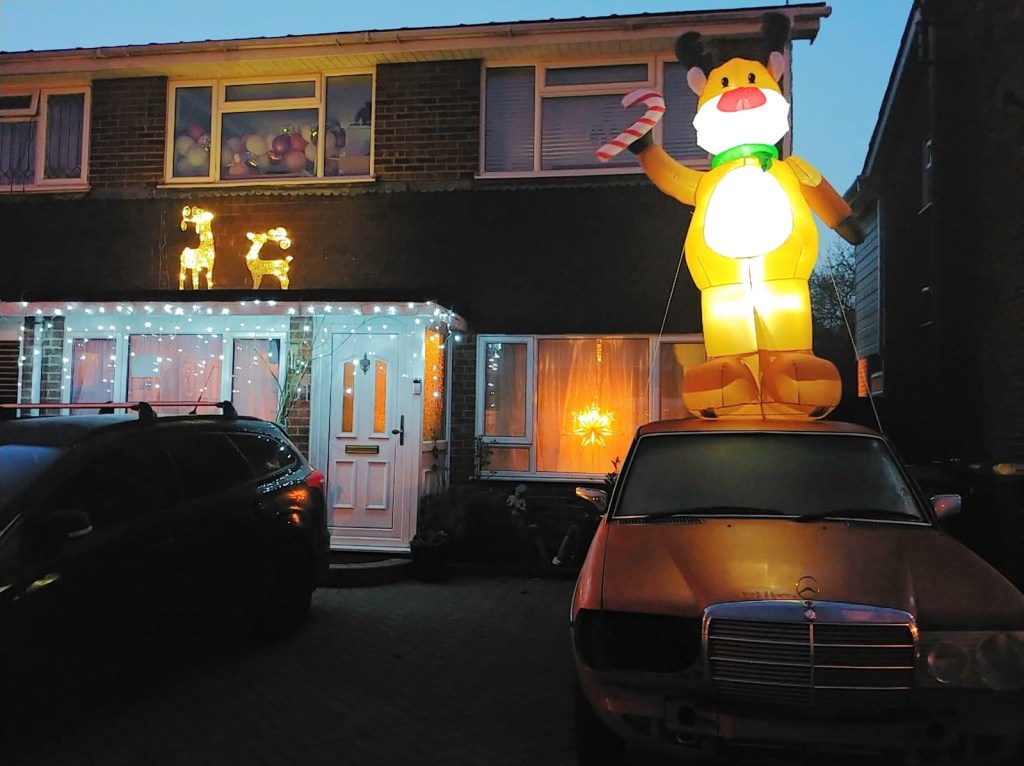
I didn’t plan to do any work on the car over Christmas, yet I still found myself in the back of it trying to secure an 8 foot tall inflatable reindeer, because where else would you put one other than on the roof of a somewhat sorry looking W123?
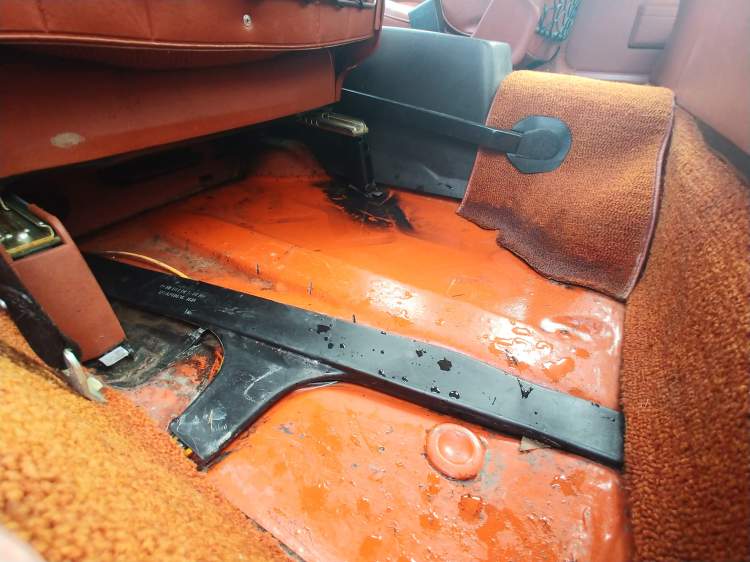
In the rear passenger footwell I was greeted by very soggy carpets, which when taken out revealed a large puddle of water. But where does a car leak for water to collect in the rear of the car? There was no sign of water anywhere else.
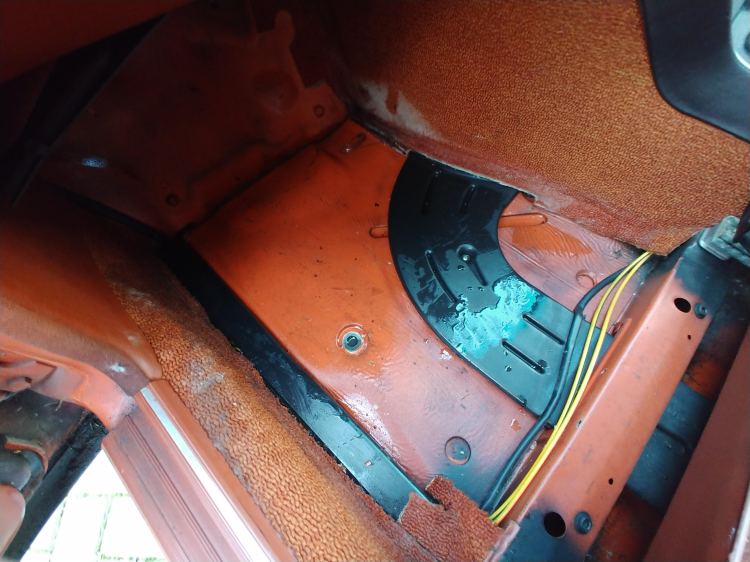
As it turns out this is a very common issue on the W123 model. Although water presents itself at the rear of the car it is actually getting in at the front, tracking along under the plastic cable covers until it finds the lowest point of the car, the rear passenger footwells.
Lifting out the front carpets it looked fairly dry all for a couple of damp patches, but sure enough the cable runs were full of water. After soaking up as much water as I could with towels and a couple of days of a fan heater running inside the car it was back to being bone dry.
Now to work out how the water was getting into the car in the first place…
There are a number of drainage channels around the car designed to manage water, but if these get blocked they will back up and water will find another route.
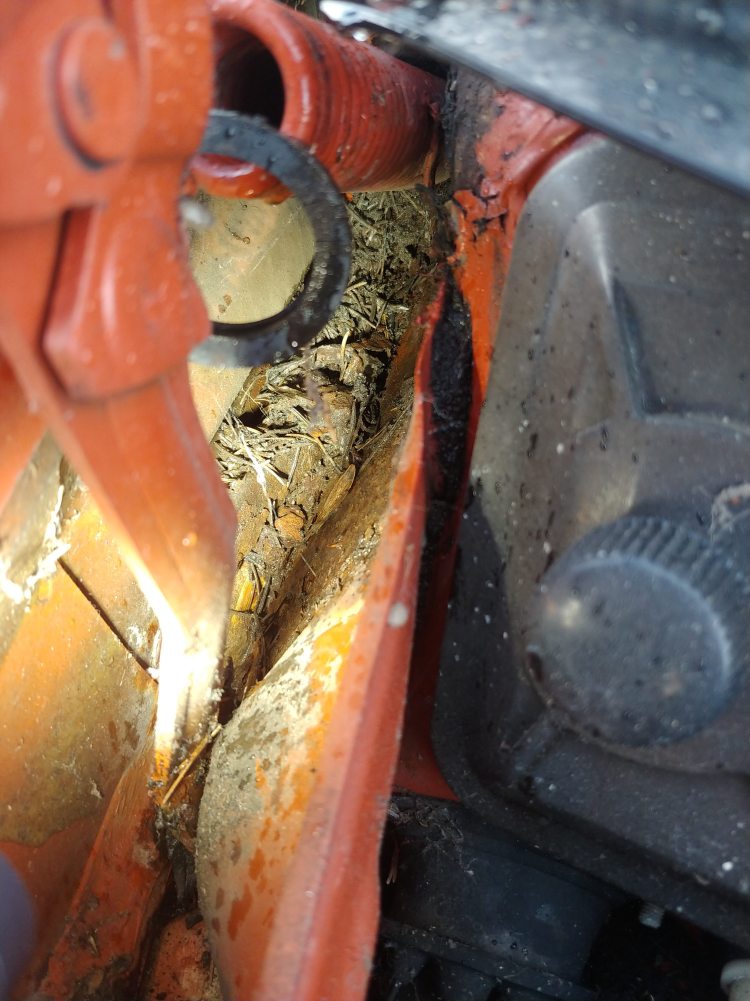
At the front of the car there are two drainage channels, one either side under the bonnet hinges. Water that runs off from the roof and windscreen collects in a channel that runs along the bottom edge of the glass and then flows to either end of the windscreen into a void between the inner and outer wing. A drain hole here then allows the water to drain out and away down through the wheel arch. But if not regularly cleaned these drain holes can get blocked, which as you can see from the photo below was what had happened to me.
The best way I found to remove all the years of accumulated debris was to use a length of garden wire with a loop bent on the end. This could get deep into the back of the space between the inner and outer wing which is too tight to get a hand in and drag it forward where it could be picked out. As you can see the debris holds onto water even when the majority has drained out keeping the whole area damp, so aside from leaks block drain holes can eventually lead to rust if left too long.
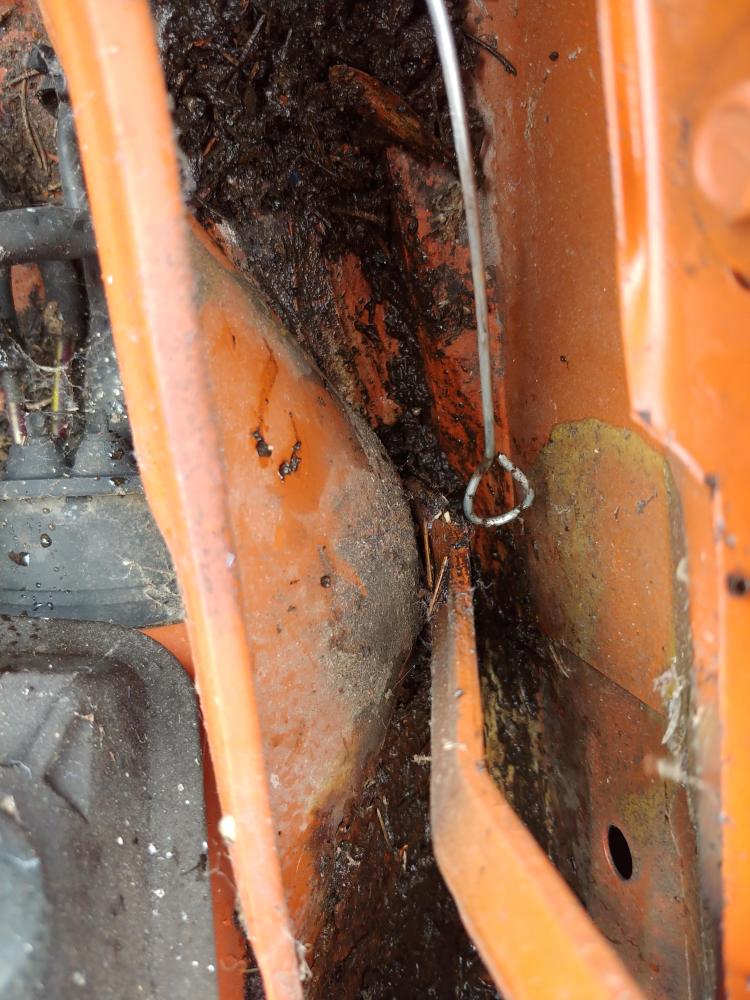
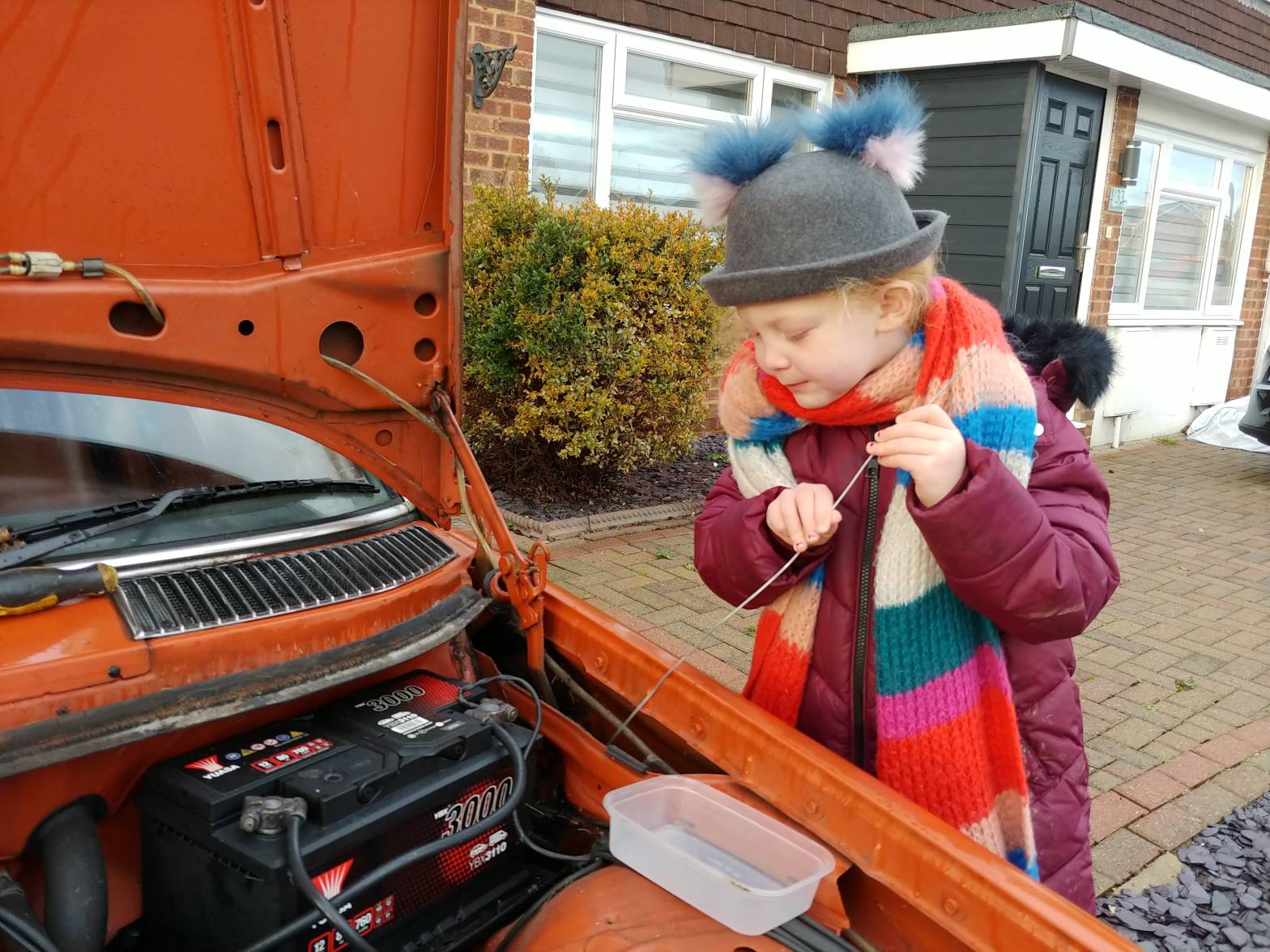
To make it an even easier job, I wholeheartedly recommend giving the job to a keen child. Spud has done a great job here.

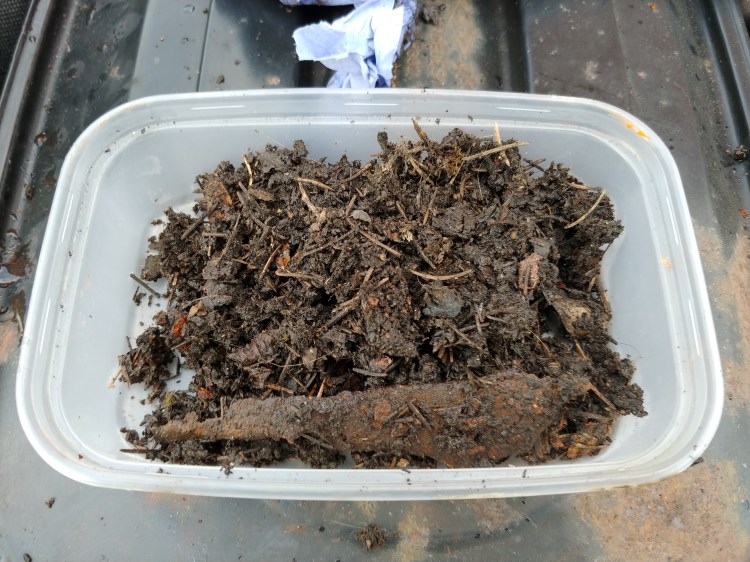
This is all the crud removed from just one side.
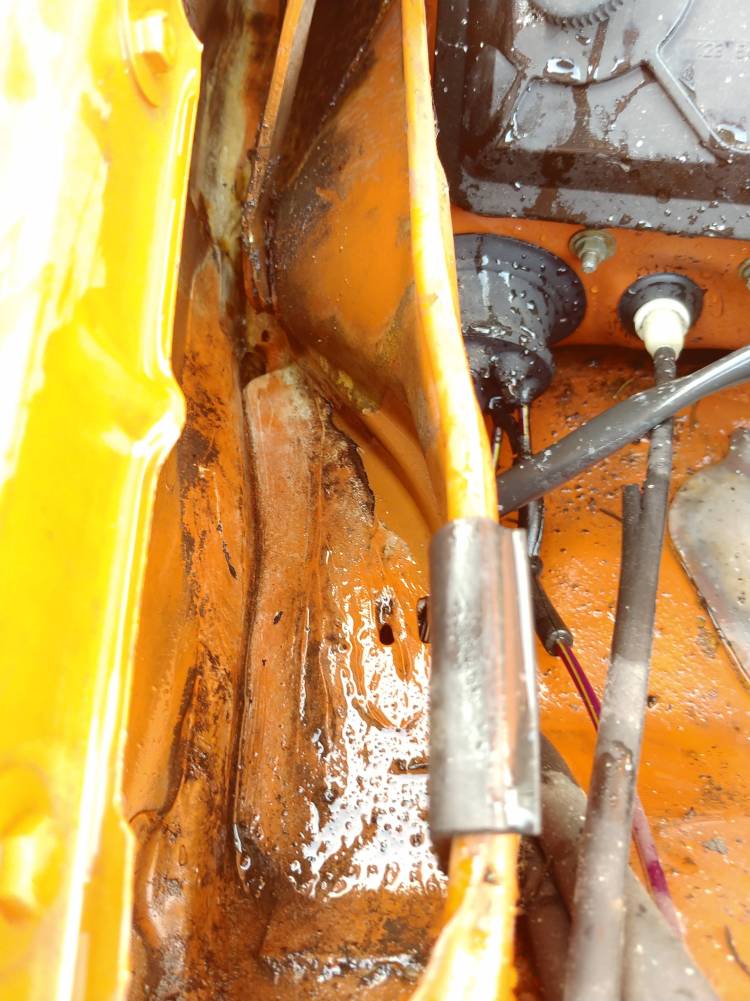
After being cleared out and washed you can now see the drainage hole. Fortunately there is no sign of rust, I must have caught it early enough.
I might have been well late in putting this post up, but at least the last 6 months has proven that the issue is resolved, there has been no more water getting inside the cabin.
If you want to see more progress updates, don’t forget to subscribe!
 Mercedes W123 230 Restoration